Many businesses have a beautiful website that Google cannot find, or an English version that Google still ignores in favour of the Vietnamese page for foreign visitors. An SEO-ready website must solve both: content that Google reads correctly, and each language reaching its own readers.
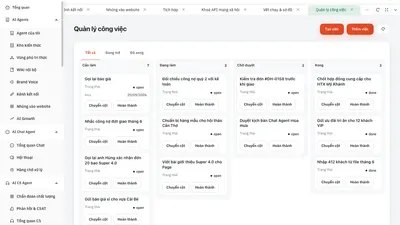
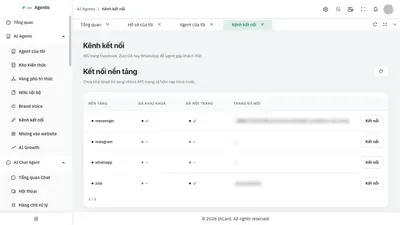
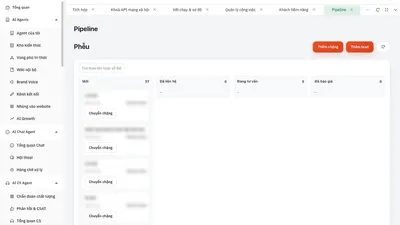
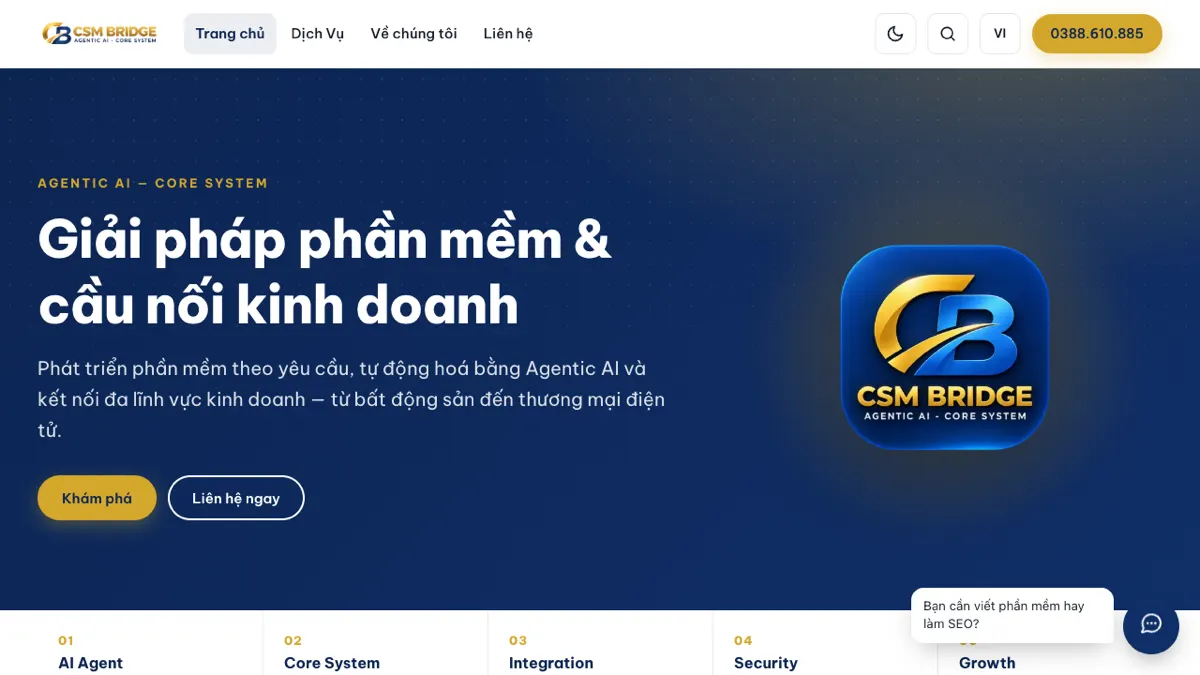
CSM Bridge's web platform runs csmbridge.net and h-holding.vn. Every image in this article was captured directly from those two sites and from the content admin console.
Three languages on one SEO-ready website
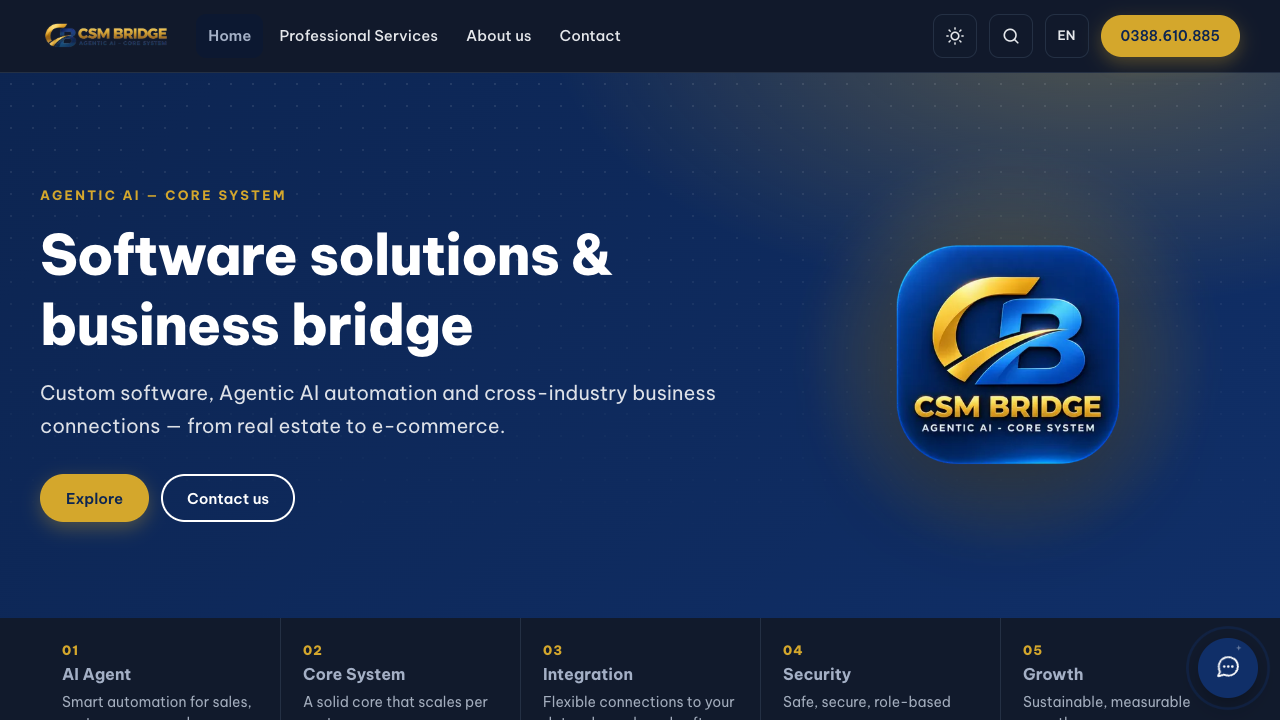
Every page has three versions: Vietnamese at the root path, English under /en/ and Chinese under /zh/. Menus, headings, taglines and article bodies are all translated — not just a few buttons.

Google knows which version is for whom
Each page declares hreflang tags for vi, en, zh and x-default, plus a canonical tag. The sitemap.xml lists all three versions of every URL as well. Google therefore treats them as three editions of the same content rather than duplicates, and shows searchers the right language.
Each article also carries Open Graph tags, so shares on social media show the right image and title, and JSON-LD structured data that helps search engines understand the content type.
Light and dark mode, a look for every brand
A toggle at the top of the page lets readers switch between a light and a dark background. Dark mode is easier on the eyes in the evening and on phones.
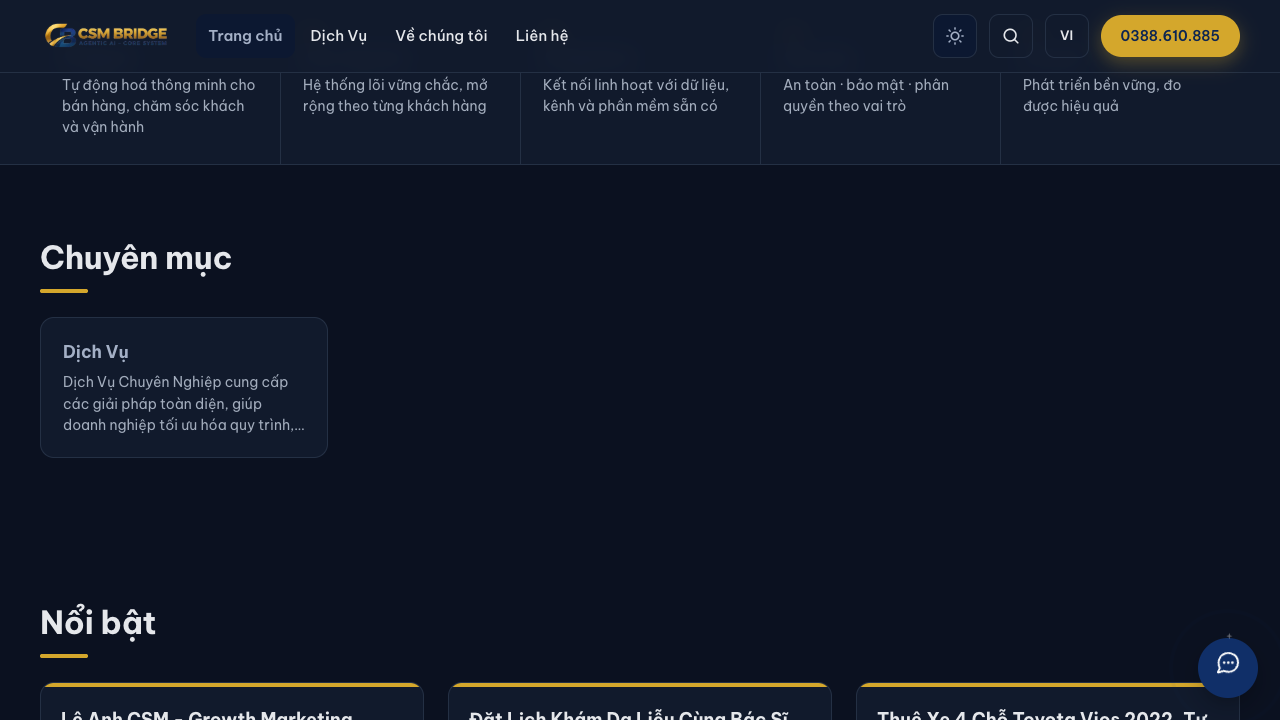
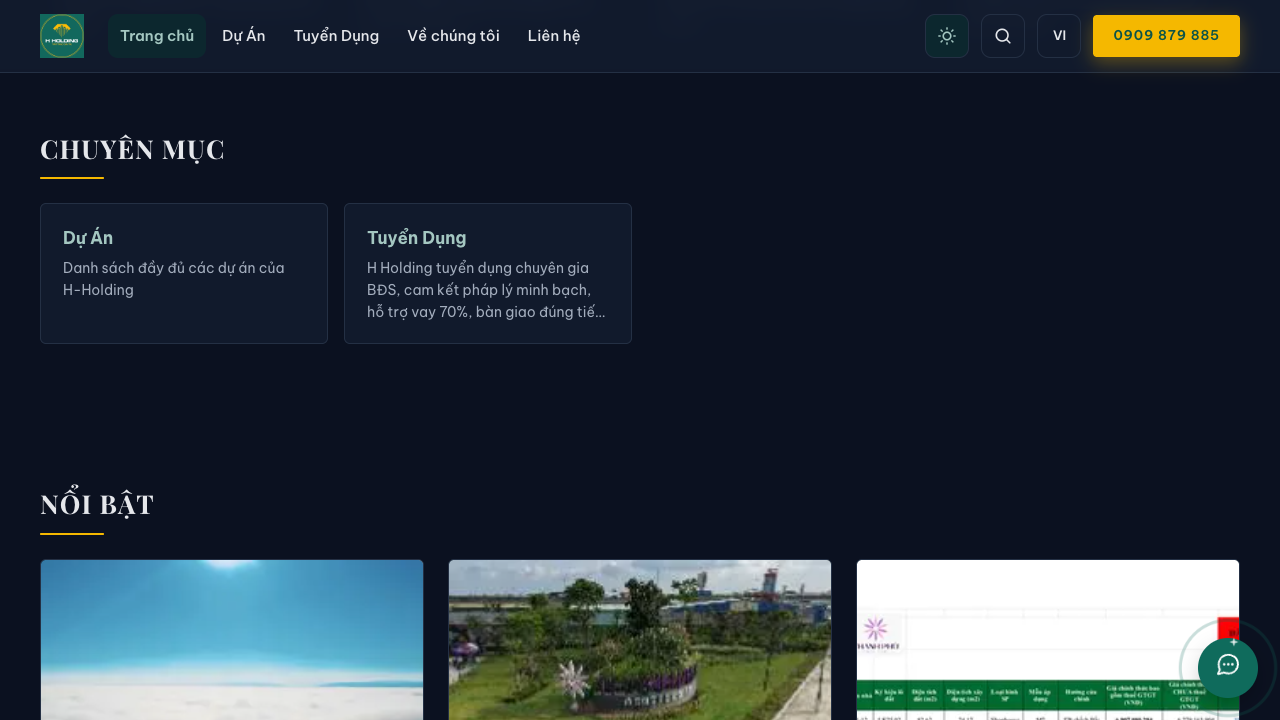
On the same platform, each domain keeps its own identity: csmbridge.net uses navy and gold, while h-holding.vn uses green with an elegant serif typeface suited to real estate.
Manage trilingual articles in one place
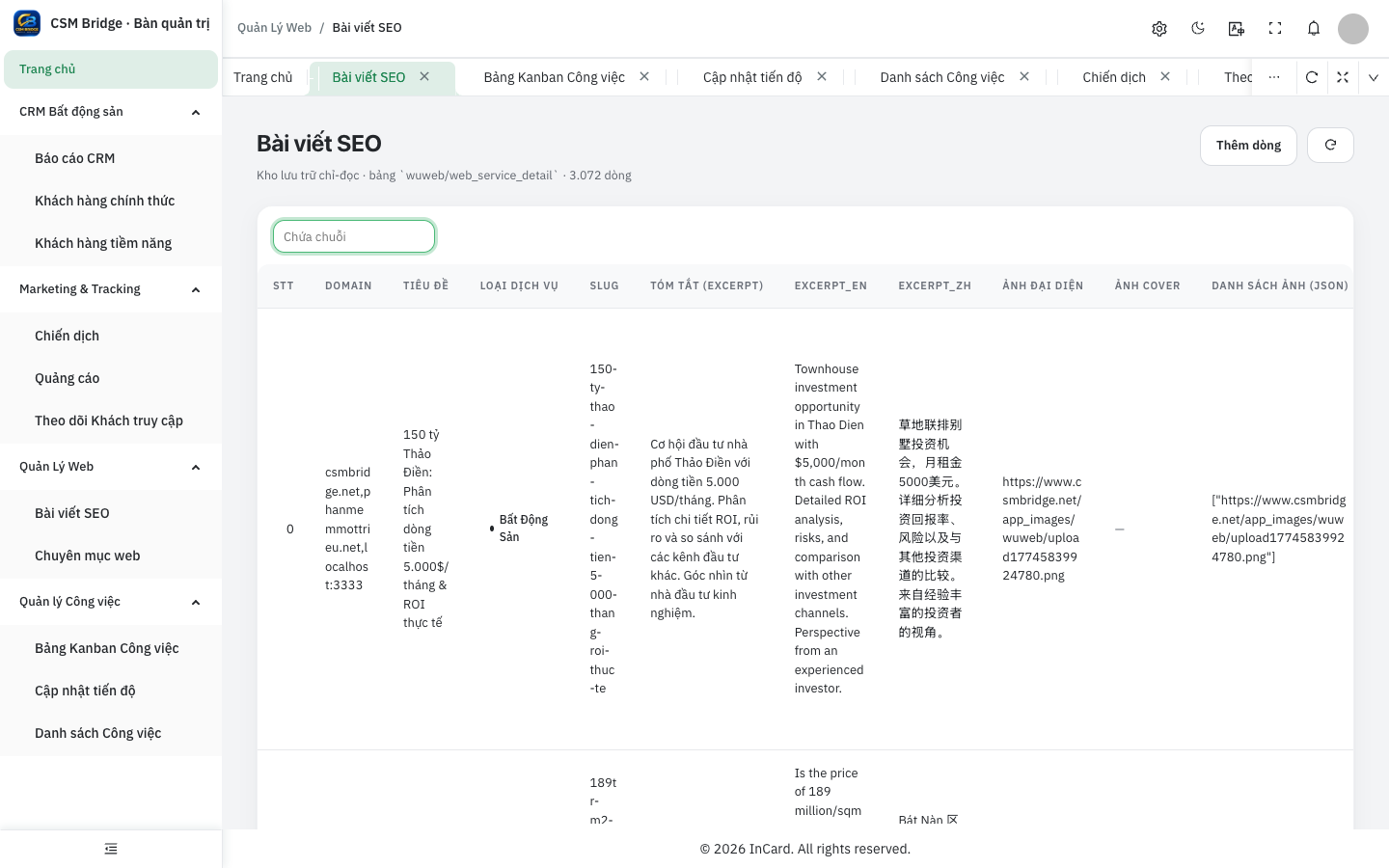
In the admin console, the Web Management menu contains "SEO Articles" and "Web Categories". Each article has its own title, excerpt and keywords per language, along with a featured image, publish date and visibility status.
SEO scoring before you publish
The system includes a deterministic SEO scorer that uses no AI calls. It checks 16 criteria: title and description length, keyword placement in the title, the first 100 words and a subheading, keyword density, article length, image alt text, internal links, outline, URL slug and sentence length.
Three criteria are dedicated to duplication: overlap with other articles on the same site, images already used elsewhere, and images taken from other websites. The article you are reading was scored this way before it went live.
Clean up duplicate posts per domain
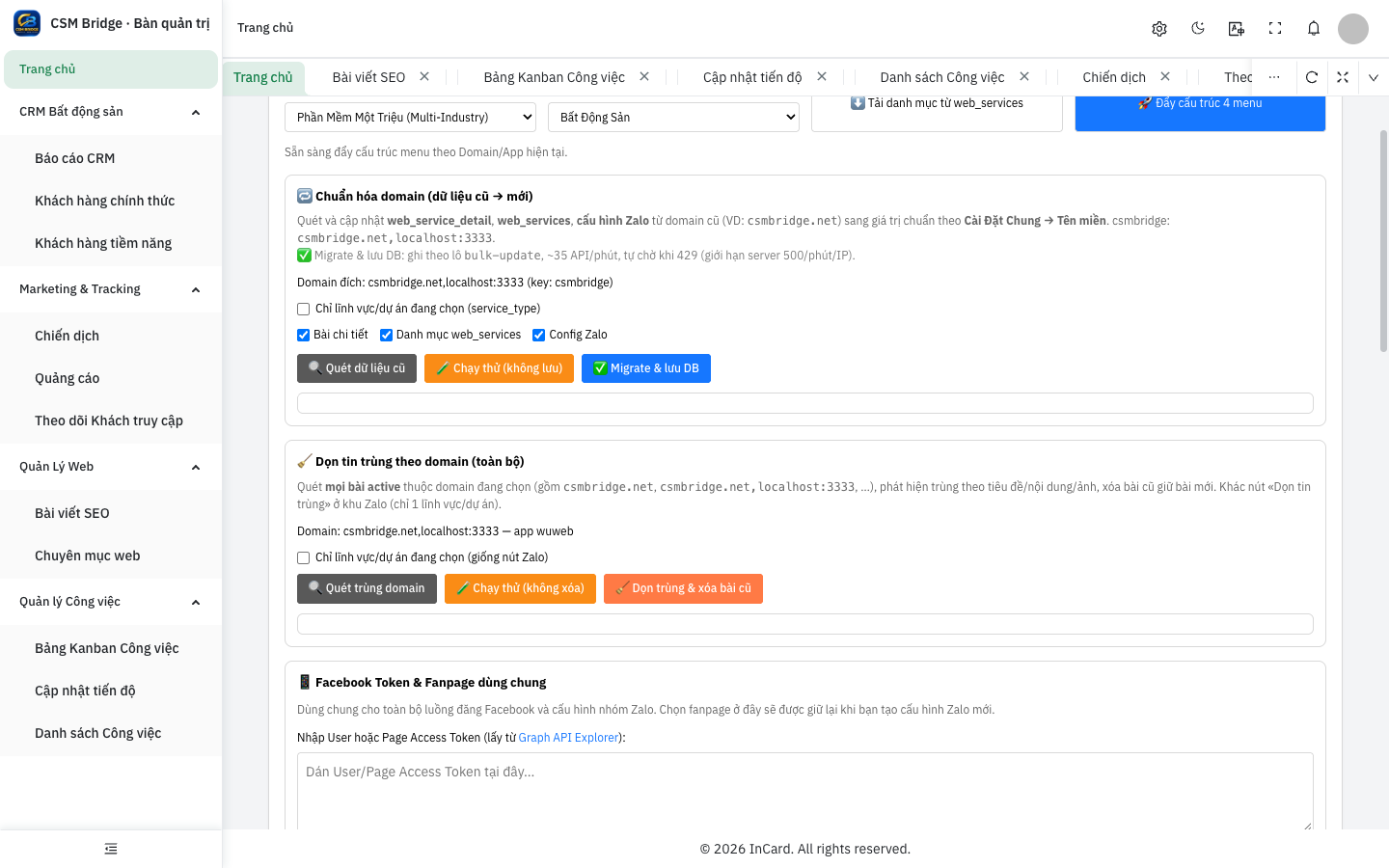
For sites with many posts, the "clean duplicates by domain" tool scans every published article and flags duplicates by title, content and image. A dry run always lets you review the list before any old post is removed.
Light images that load fast on phones
Uploaded images are automatically resized by the server to the display size and converted to the lighter WebP format. Mobile readers never download a multi-megabyte original, so pages open faster — a factor Google uses in ranking.
Publishing a trilingual article, step by step
- Choose a category and enter the Vietnamese title, excerpt and keywords.
- Fill in the English and Chinese versions in the matching fields of the same article.
- Pick a featured image and insert illustrations with alt text.
- Run the SEO score, fix any failing criteria and check for duplicate content and images.
- Publish: the new page automatically gets three URLs, hreflang tags and a sitemap entry.
Every step happens on one screen — no publishing three times in three places.
Who this SEO-ready website is for
- Businesses that need to reach English- or Chinese-speaking customers.
- Groups with several brands that want one shared admin platform.
- Content teams that need SEO checks and duplicate prevention while writing.
Any site can add a 24/7 AI website chat assistant to answer readers on the spot. In real estate? See real-estate CRM.
Talk to us
Want to see it running on your own business data? Get in touch via the Contact page or ask the chat assistant in the corner of the screen. Explore more in the AI Agent Solutions section.