Investment Analysis of Mac Thi Buoi, District 1 Hotel: Profit Opportunity or Hidden Risks?
In the perpetually attractive market of Ho Chi Minh City's central business district, owning a hotel in a prime location like District 1 has always been a goal for many investors. However, not every investment channel yields the expected returns. This analysis delves into the investment potential of the hotel located at 84 Mac Thi Buoi Street, Ben Nghe Ward, District 1, focusing on the core factors an experienced investor prioritizes: cash flow, return on investment (ROI), and potential risks.
1. The Question: Is a Central District 1 Hotel Still an Attractive Investment?
District 1, the heart of HCMC, is a magnet for domestic and international tourists, as well as a vibrant economic and commercial hub. This creates an ideal environment for the hotel business. However, with property prices among the highest in the country and intense competition from international hotel chains and new accommodation models, investing in a hotel here requires careful consideration. The question arises: With a selling price of 185 billion VND, does the Mac Thi Buoi street-front hotel truly offer stable cash flow and attractive returns, or is it merely a nominal investment with high risks?
2. Specific Property Data
The property details are as follows:
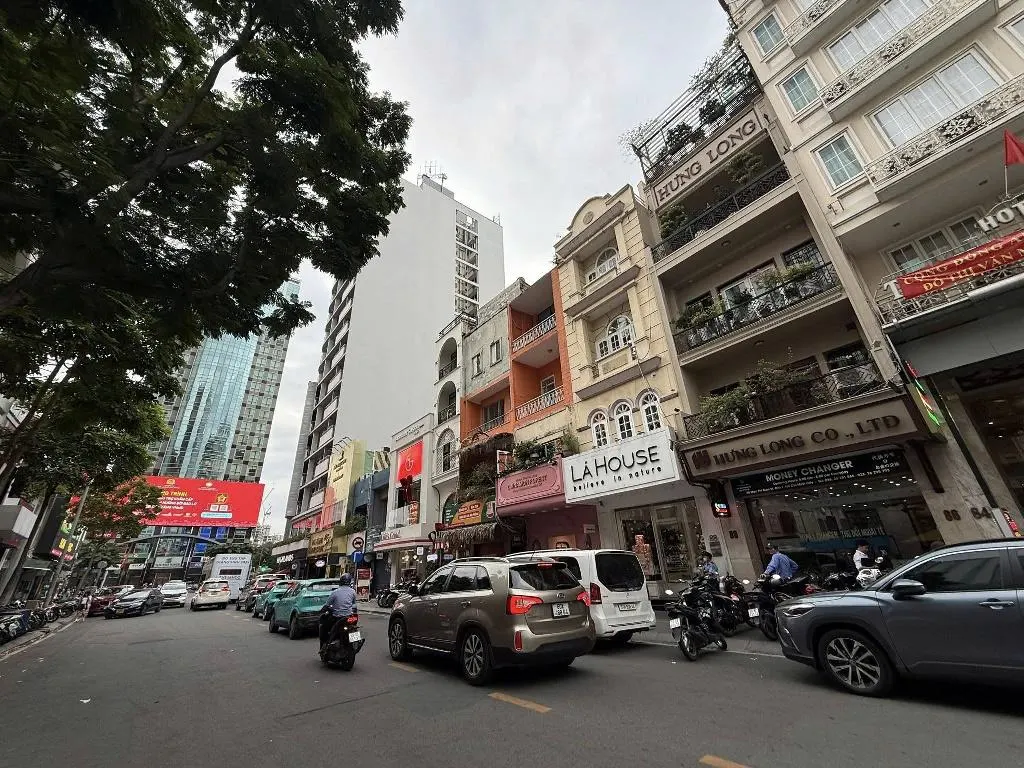
- Address: 84 Mac Thi Buoi, Ben Nghe Ward, District 1.
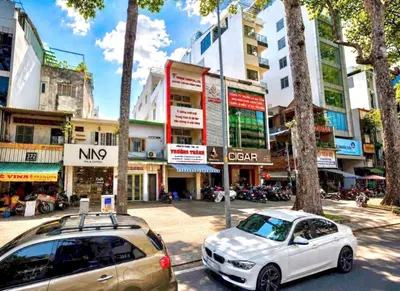
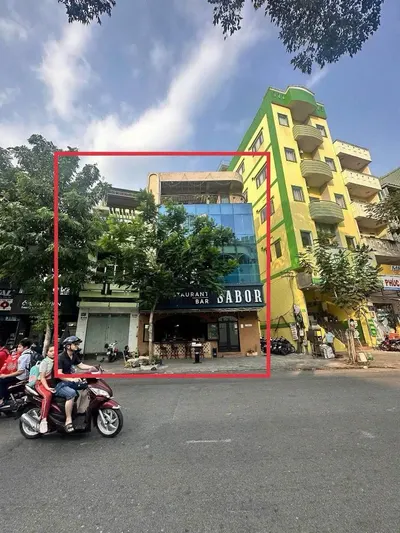
- Location: Prime central District 1 area, on a high-end commercial and tourist street.
- Land Area: 5.10m x 18m.
- Certified Area: 105.1m².
- Structure: 1 Basement + 10 Floors.
- Number of Hotel Rooms: 28 rooms.
- Asking Price: 185 billion VND.
- Contact: Tuong Villa - 093 416 18 16.
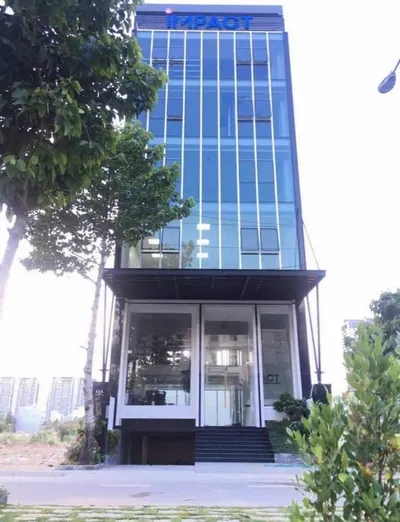
With a 5.10m street frontage, this is advantageous for accessibility and brand recognition, especially on a bustling street like Mac Thi Buoi. The 1 Hầm + 10 Tầng structure with 28 rooms indicates a reasonably good operational scale, capable of serving diverse accommodation needs. The central District 1 location is a key factor, ensuring a high volume of potential customers from tourism, business, and events.
3. Detailed Comparison: Cash Flow and ROI Analysis
To assess investment potential, we need to estimate cash flow and ROI based on reasonable assumptions:
- Estimated Revenue:
- Occupancy Rate: Assume an average annual occupancy rate of 70% (a fairly optimistic figure for a hotel in this location, but requires verification).
- Average Room Rate: For a 3-4 star hotel in District 1, room rates can range from 1,500,000 VND to 3,000,000 VND per night, depending on room type and season. We'll use an average of 2,000,000 VND per night.
- Annual Room Revenue: 28 rooms * 365 days * 70% * 2,000,000 VND/room/night = Approx. 14.23 billion VND.
- Other Service Revenue (F&B, small events...): Estimate an additional 20% of room revenue = Approx. 2.85 billion VND.
- Total Estimated Revenue: Approx. 17.08 billion VND/year.
- Estimated Annual Operating Costs:
- Personnel Costs: Assume 30% of revenue = Approx. 5.12 billion VND.
- Operational, Maintenance, Utilities, Internet Costs: Assume 15% of revenue = Approx. 2.56 billion VND.
- Marketing, Sales Costs: Assume 5% of revenue = Approx. 0.85 billion VND.
- Management, Legal, Tax Costs: Assume 10% of revenue = Approx. 1.71 billion VND.
- Total Estimated Operating Costs: Approx. 10.24 billion VND/year.
- Estimated Profit Before Tax (EBT):
- Revenue - Costs = 17.08 billion - 10.24 billion = Approx. 6.84 billion VND/year.
- Estimated Profit After Tax (PAT):
- Assume a corporate income tax rate of 20%. Net Profit = 6.84 billion * (1 - 0.20) = Approx. 5.47 billion VND/year.
- Return on Investment (ROI) Analysis:
- Investment Value: 185 billion VND.
- ROI (based on Net Profit): (5.47 billion VND / 185 billion VND) * 100% = Approx. 2.96% per year.
Commentary: With an ROI of approximately 2.96% per year, this is a rather low rate of return compared to expectations for real estate investment, especially in the high-end segment. This figure is even lower than current bank savings interest rates. This raises significant questions about the financial attractiveness of this investment, unless there are other unmentioned factors or the revenue/cost assumptions need extremely cautious re-evaluation.
4. Forecasts and Risks
- Forecasts:
- Real Estate Appreciation Potential: The prime District 1 location has the potential for value appreciation over time due to limited land supply and persistent demand. However, the appreciation rate might slow down amidst economic fluctuations.
- Revenue Growth: If hotel operations are efficient, improving occupancy rates or reasonably increasing room rates, revenue could grow.
- Risks:
- Occupancy Rate Risk: If occupancy rates fall below expectations (below 70%), profits will decline sharply. Competition from new rivals or alternative business models (e.g., strong growth of Airbnb) could impact occupancy.
- Cost Risks: Operating, personnel, and maintenance costs can fluctuate and increase beyond projections, especially energy and material costs.
- Legal and Planning Risks: New regulations on hotel operations, fire safety, or urban planning could affect the property's operation or value.
- Market Risks: Macroeconomic volatility, economic downturns, or force majeure events (like pandemics) can reduce tourist and business traveler numbers, directly impacting revenue.
- Management Risks: Operating a hotel requires a professional and efficient management team. Poor management can lead to service and operational issues, affecting reputation and profits.
- Valuation Risks: The asking price of 185 billion VND might include both land value and construction value. However, it needs to be compared with the market value of comparable hotels or land values in the area to assess if the price is reasonable.
5. Conclusion and Recommendation
Based on preliminary financial analysis, the hotel at 84 Mac Thi Buoi, District 1, priced at 185 billion VND, shows a rather low initial estimated ROI of approximately 2.96% per year. This figure is not particularly attractive for an investor seeking stable cash flow and high returns, especially when compared to other investment channels or savings interest rates.
Recommendation:
Investors should conduct thorough due diligence before making a decision. Necessary steps include:
- Verify Financial Data: Request detailed financial statements from the owner for at least the past 3-5 years to confirm actual revenue, costs, and profits.
- Independent Market Survey: Assess the actual average occupancy rates of comparable hotels in the area, competitive room rates, and market trends.
- Detailed Operating Cost Assessment: Analyze cost components in depth and identify potential optimization areas.
- Evaluate Land and Construction Value: Compare with land prices and construction costs of similar properties in District 1.
- Consider Renovation/Upgrade Potential: If feasible, renovations or changes to the business model could yield higher returns.
If, after due diligence, the actual financial figures reveal significantly higher potential cash flow and ROI than initially estimated, or if there's potential for substantial property value appreciation, then this could be considered a worthwhile investment opportunity. Otherwise, based on the current information, investing in this asset presents more risks than opportunities for superior returns.