Investment Analysis: Mạc Thị Bưởi Street Front Hotel, District 1 - 185 Billion VND
In the current real estate market, identifying safe investment channels that generate stable cash flow is paramount for experienced investors. This analysis delves into a unique asset: a hotel located at 84 Mạc Thị Bưởi Street, Bến Nghé Ward, District 1, with an asking price of 185 billion VND. We will evaluate its profit potential, risks, and key considerations before making an investment decision.
1. The Question: Is a 185 Billion VND Investment in a D1 Hotel Feasible?
When a property valued at 185 billion VND enters the market, the primary question for any serious investor is: Will this investment yield returns commensurate with the capital invested? Particularly, this is a hotel in Saigon's prime location – Mạc Thị Bưởi street, District 1. However, a property's value extends beyond its location to its ability to generate cash flow, operational efficiency, and future growth prospects. A thorough analysis of these factors is crucial to determine if this is an investment opportunity or a costly venture with potential risks.
2. Specific Data: Asset and Market Overview
Asset Details:
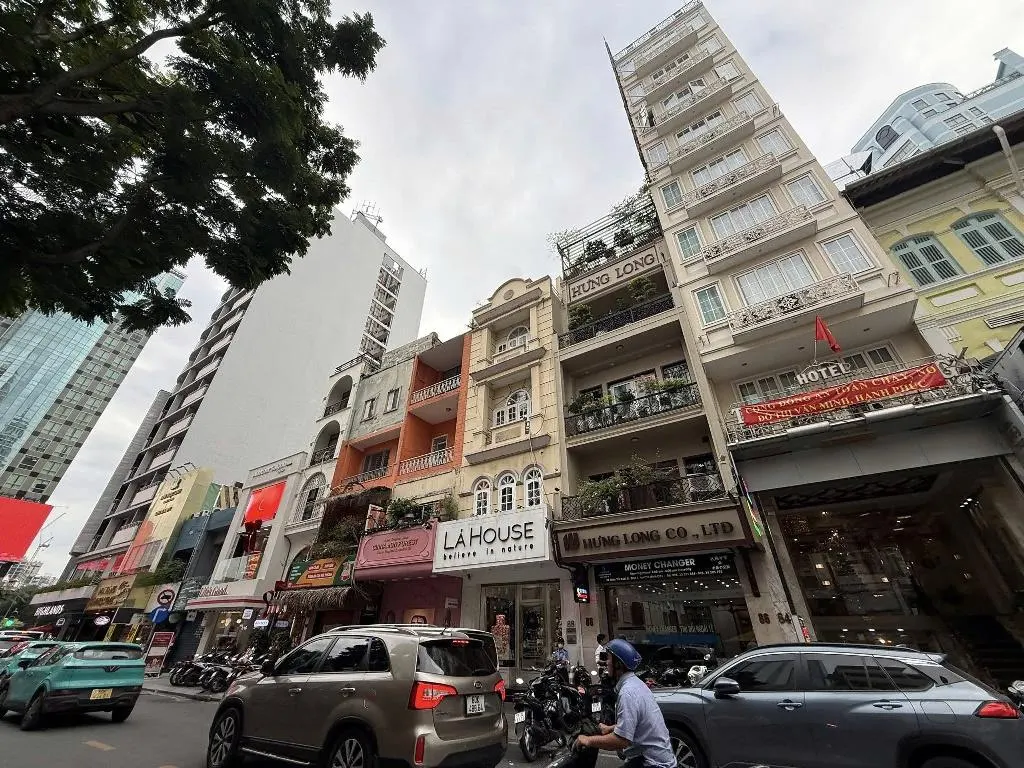
- Address: 84 Mạc Thị Bưởi, Bến Nghé Ward, District 1, HCMC.
- Property Type: Hotel.
- Land Area (Legal Ownership): 105.1m2.
- Dimensions: 5.10m x 18m.
- Structure: 1 basement + 10 floors, comprising 28 hotel rooms.
- Asking Price: 185 billion VND.
- Contact: Tuờng Villa - 093 416 18 16.
Location Analysis:
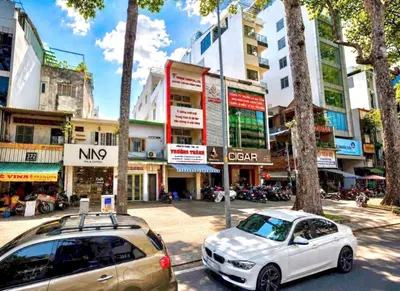
The location at 84 Mạc Thị Bưởi, Bến Nghé Ward, District 1, is considered the heart of the city. This street is renowned for its concentration of commercial, financial, and high-end tourism activities. Owning a frontage on this street offers advantages in accessing diverse clientele, from business travelers and international tourists to those seeking luxury experiences. Convenience for accessing attractions, shopping areas, and premium offices is a significant plus.
Analysis of the Hotel Market in Central District 1:
District 1 is consistently the economic, cultural, and tourism hub of HCMC, attracting a large number of domestic and international visitors. Demand for accommodation in this area remains high, particularly for 3-5 star hotels. However, the supply of prime commercial real estate in District 1 is increasingly scarce, driving up the value of existing assets. Recent market reports indicate average occupancy rates for hotels in the city center range from 70-85%, depending on the season. Average room rates for 3-4 star hotels can range from 1,500,000 - 3,000,000 VND/night, depending on amenities and services. Higher-end segments can command several million VND per night.
Preliminary Asset Assessment:
With 28 rooms and a 10-story structure plus basement, this property is of a reasonable scale for a hotel in the city center. The 105.1m2 land area with a 5.1m frontage is suitable for a high-rise building. However, a thorough review of construction quality, interior design, technical systems, and operating licenses is essential to ensure efficient operation and regulatory compliance.
3. Specific Comparison A vs. B: Mạc Thị Bưởi Front Hotel vs. Other Investment Options
To determine if the 84 Mạc Thị Bưởi hotel is a sound investment, we must compare it with other real estate investment options, especially those offering stable cash flow.
Comparison with Equivalent Hotels in District 1:
Finding hotels with 28 rooms and prime street frontage in District 1 priced under 200 billion VND is challenging. However, if available, we should compare:
- Specific Location: What advantages does Mạc Thị Bưởi offer over Đồng Khởi, Lê Lợi, or Hai Bà Trưng streets? Tourist concentration, business traveler volume?
- Scale and Room Quality: Number of rooms, room size, star rating (3-5 stars), amenities. Does this hotel's 28 rooms suit a specific segment?
- Revenue and Operating Profit: This is the most critical factor. Access to annual revenue, occupancy rates, and operating costs allows calculation of net profit.
- Renovation and Upgrade Costs: An older hotel might require initial investment for upgrades and repairs before effective operation.
Comparison with Other Real Estate Investment Channels:
- Long-term Rental Apartments in District 1/3:
- Pros: Relatively stable cash flow, less volatile than hotel operations, higher liquidity.
- Cons: Rental yield might be lower than a well-performing hotel, capital appreciation may be slower.
- Example: A 2-bedroom apartment in District 1 could rent for 20-30 million VND/month, totaling 240-360 million VND/year. With a purchase price of 10-15 billion VND, the rental yield could be 2-3%. A 185 billion VND hotel generating a net profit of 10-15 billion VND/year (5-8% ROI) could offer higher returns but also greater risk.
- Commercial Real Estate (Shophouses, Retail Spaces) on Major Streets:
- Pros: High rental potential, good capital appreciation if the area develops.
- Cons: Dependent on tenant's business type, potential vacancy periods between leases.
- Example: A prime street-front shophouse could rent for 100-300 million VND/month. However, the purchase price would also be very high.
- Resort Properties (Phu Quoc, Da Nang, Nha Trang):
- Pros: Good price appreciation potential driven by tourism, potential for personal vacation use.
- Cons: Less stable cash flow, highly dependent on tourism seasons, complex remote management.
In-depth Analysis of 84 Mạc Thị Bưởi:
At 185 billion VND for 105.1m2 in District 1, the land price is approximately 1.76 billion VND/m2. This is a high valuation, requiring the hotel's business operations to be extremely efficient to cover costs and generate profit. Calculated per room, the price is around 6.6 billion VND/room. This figure is substantial, making the operational performance of the 28 rooms the critical factor.
Assuming a 75% occupancy rate and an average room rate of 2,500,000 VND/night. Estimated annual revenue: 28 rooms * 365 days * 0.75 * 2,500,000 VND ≈ 19.16 billion VND. If operating costs (staff, utilities, maintenance, marketing...) account for 40-50% of revenue, net profit could range from 9.5 to 11.5 billion VND/year. The net profit margin on investment would be approximately 5.1% - 6.2%. This figure is not particularly attractive compared to the 8-10% or higher expected by many investors.
However, this is a preliminary calculation. If the hotel can operate with a higher occupancy rate, better average room rates, or generate revenue from other sources (restaurant, spa services...), the profit margin could improve significantly. Furthermore, the long-term capital appreciation potential of prime District 1 real estate is undeniable.
4. Forecasts & Risks: Looking Ahead
Forecasts:
- Revenue Growth: With a strong tourism recovery post-pandemic and its irreplaceable central location, demand for accommodation in District 1 is expected to continue growing. If the hotel is managed professionally with effective marketing strategies and service upgrades, revenue could grow steadily by 5-10% annually.
- Property Value Appreciation: Prime real estate in central districts like District 1 tends to appreciate in the long term due to scarcity and strategic location. Owning this asset could yield dual benefits from rental income and property value growth.
Risks:
- Intense Competition: The HCMC hotel market faces significant competition from international hotel chains and other short-term accommodation models. The hotel needs a distinct selling proposition and a clear competitive strategy.
- Economic and Tourism Fluctuations: The tourism and hotel industry are highly sensitive to macroeconomic shifts, pandemics, or geopolitical events. A global economic downturn or a pandemic outbreak could severely impact revenue.
- Operating and Maintenance Costs: Operating a hotel incurs substantial fixed and variable costs. Ongoing maintenance, repairs, and facility upgrades also represent significant expenses. A 10-story building may require substantial investment in technical systems, fire safety, elevators, etc.
- Legal and Zoning Risks: Thorough due diligence on operating licenses, fire safety regulations, security, and any zoning changes that could affect the hotel's future business operations is essential.
- Management Efficiency: Quality management is the key determinant of a hotel's success. Inexperienced or unprofessional management teams can lead to operational losses, diminishing the asset's value.
- Liquidity of High-Value Assets: With a price tag of 185 billion VND, finding a buyer for this asset may take longer than for lower-value properties.
5. Conclusion & Recommendation: The Investment Decision
The hotel at 84 Mạc Thị Bưởi Street, District 1, priced at 185 billion VND, is an asset with an exceptionally prime location, offering attractive profit potential if operated efficiently. However, this price point demands extremely high operating profit margins to meet the expectations of experienced investors who prioritize stable cash flow and high ROI.
Recommendation:
Investors should approach this asset with utmost caution. Firstly, it is imperative to request the hotel's full financial and operational reports for at least the past 3-5 years (if available). Conduct a detailed analysis of revenue, expenses, net profit, average occupancy rates, and average room rates. Concurrently, engage independent appraisal experts to assess the facility's condition, potential for improvement, and any hidden risks.
If, after thorough due diligence, the asset demonstrates the potential to generate an annual net cash flow of at least 8-10% of the investment value (approximately 15-18.5 billion VND per year) and shows long-term property appreciation potential, it could be a worthy investment opportunity. However, if the expected cash flow is lower and operational risks are too significant, investors should consider alternative options with clearer returns and lower risks.
It must be emphasized that at 185 billion VND, this is not an investment for everyone. It requires substantial capital, deep understanding of the hotel industry, and a certain level of risk tolerance.